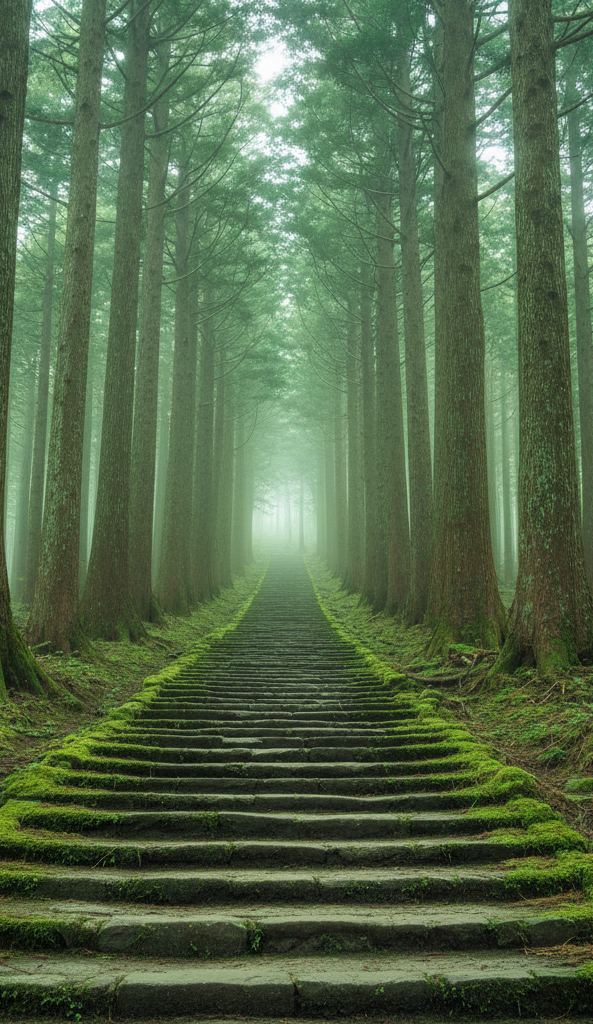
Stone steps worn hollow, cedar older than the steps
Two thousand steps under cedar: reserve five nights at Dewa Sanzan and the Shonai plain
Five nights from $1,860 per person, two sharing a double room. This is the last segment of the line from Kanazawa to the Shonai plain, and it is also sold alone. July to early October is the window: the high mountain holds snow until late June and the road to the third shrine closes in early November. The stairway itself is walkable for most of the year.
Reserve this with the officeNothing is charged here. The form stays open at any hour and a person writes back inside one working day.
Three mountains taken in one order
Dewa Sanzan is three mountains treated as one place and walked in an order: the low one for the life you are living, the high one for death, the third for what comes after. The low mountain carries a stone stairway of two thousand four hundred and forty six steps through cedar that was old before the steps were cut, with a five storey wooden tower standing by itself near the bottom. The high one is a long alpine day and lies under snow most of the year. The third is a small hot spring shrine where the object of worship is a rock, where shoes come off and where photography is forbidden outright. Below all three the Shonai plain is flat, wet and almost entirely rice, with a river, a port town and a row of old storehouses.
Climbing the stairway, and the plain below
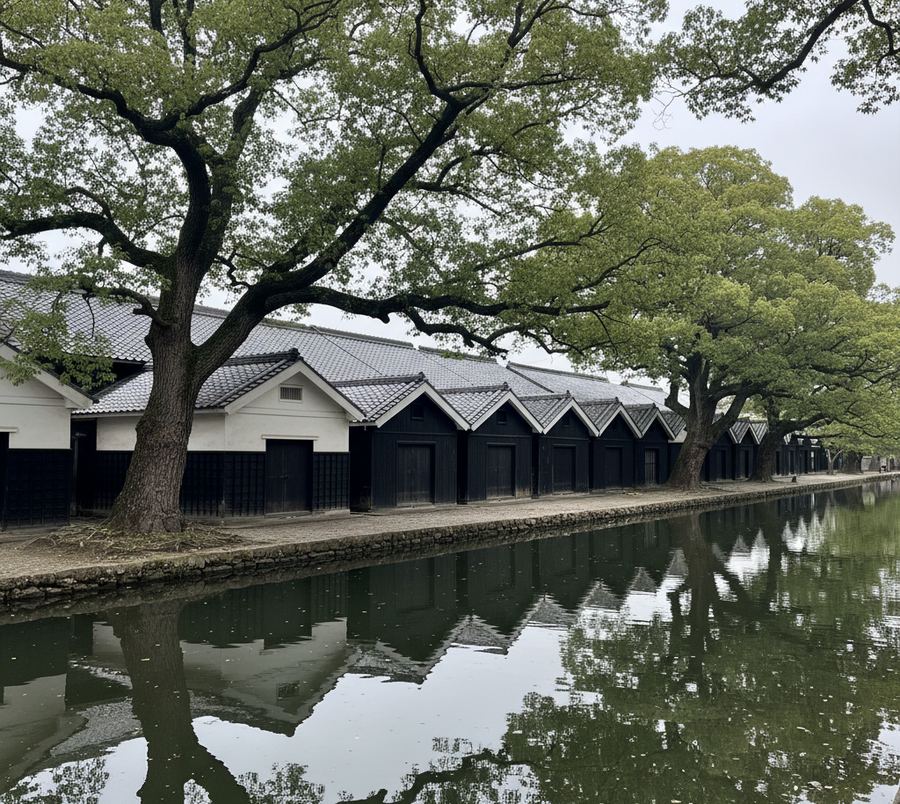
Most people give the stairway a morning and take three hours over it, which is slow on purpose: the tower stands ten minutes in, the middle flight is the steepest, and there is a tea house at the level part with the valley behind you. Coming down is harder on the knees than going up. A second day goes to the high mountain when the season allows, eight hours on foot with a guide, or to the third shrine, which needs a short bus and a barefoot walk. The rest belongs to the plain: a working port town, black timber storehouses under old zelkova trees, and the kind of flat road where you watch weather arrive for half an hour before it reaches you.
A night in transit to get here
This is the heaviest move on the line and the office marks it four, which means a night goes into getting here. From the peninsula the day runs east and then north by road and rail, and rather than land at eleven at night you sleep on the way, in a plain business room in a town nobody visits for its own sake. That night sits inside the five below, so four are spent at the mountains and on the plain. You lose most of a day and gain a workable arrival: the stairway wants an early start, and beginning it after a night upright in a seat is a poor idea. Taken alone, this segment starts at the plain and the transit night comes out of the figure.
Where the figure stops
From $1,860 per person, two sharing a double room, for five nights, one of which is the transit night described above. Two of the remaining four are in pilgrim lodgings at the foot of the low mountain, where the rooms are simple, the walls are paper and the food is vegetarian, cooked to a rule rather than to a menu. The figure holds the five nights, breakfast daily, dinner on the lodging nights, the transfers named here and the guide for the high mountain day when the season is open. It does not hold your travel into or out of the country, entry at the third shrine, lunches, drinks or insurance, which this office does not sell. The operating company bills you and takes payment; nothing at all is paid to this office.
| Nights | 5 |
|---|---|
| From | $1,860 per person, two sharing |
| Move into it | a night in transit |
| Part of | Sea of Japan coast |
| Taken alone | Yes. Nothing obliges you to take the rest of the line. |
| Inside the figure | Rooms, the ground arrangements named on this page, and the local operating company's own charges. |
| Outside the figure | Getting to the country, meals not named above, anything personal, and anything you add later. |
Asked before people commit
Do I have to walk all two thousand steps?
No. A road runs to the top of the low mountain and the transfer can put you there, after which you walk down, or skip the stairway entirely. But the cedar corridor is why most people come, and it reads very differently from a car park. If stairs are a problem, say so when you ask and the operating company will plan the day the other way round.
Can you promise the high mountain will be open?
No. It opens when the snow lets it, usually early July, and shuts in September, and a bad summer moves both ends. If it is closed in your week the day is replaced by the third shrine or the plain, and the figure does not move, because the guide and the transfers were part of it either way. We will not hold a date we think is doubtful without telling you that it is doubtful.
What are the pilgrim lodgings actually like?
Plain. A tatami room with paper walls and a shared bathroom, bedding laid on the floor, dinner at a fixed hour, and in some houses no lock on the door. The food is vegetarian: mountain vegetables, mushrooms and rice, cooked to a temple rule rather than to a menu. If two of five nights of that is more than you want, ask and the operating company can put you on the plain in an ordinary hotel instead, at a different figure.
Segment 3 of 3 on Sea of Japan coast
You can take this segment on its own and leave the rest of the line alone. Nothing here obliges you to walk the whole thing, and the figure for one piece is the figure for one piece.
Reserve one segment, or a whole line
This form is open at any hour, and whatever reaches it is read by a person who answers inside one working day. Nothing you send commits you, and no figure is charged at this end at any point.