Seawater carried up the beach in wooden pails
A rural coast of salt pans and lacquer: reserve five nights on the Noto peninsula by road
Five nights from $1,740 per person, two sharing a double room. This is the middle segment of the line from Kanazawa to the Shonai plain, and it is sold on its own as well. May, June, September and October are the workable months. Winter here is wind straight off the sea and closed roads; the salt work runs only from May to September.
Reserve this with the officeNothing is charged here. The form stays open at any hour and a person writes back inside one working day.
Ground, sea and three surviving crafts
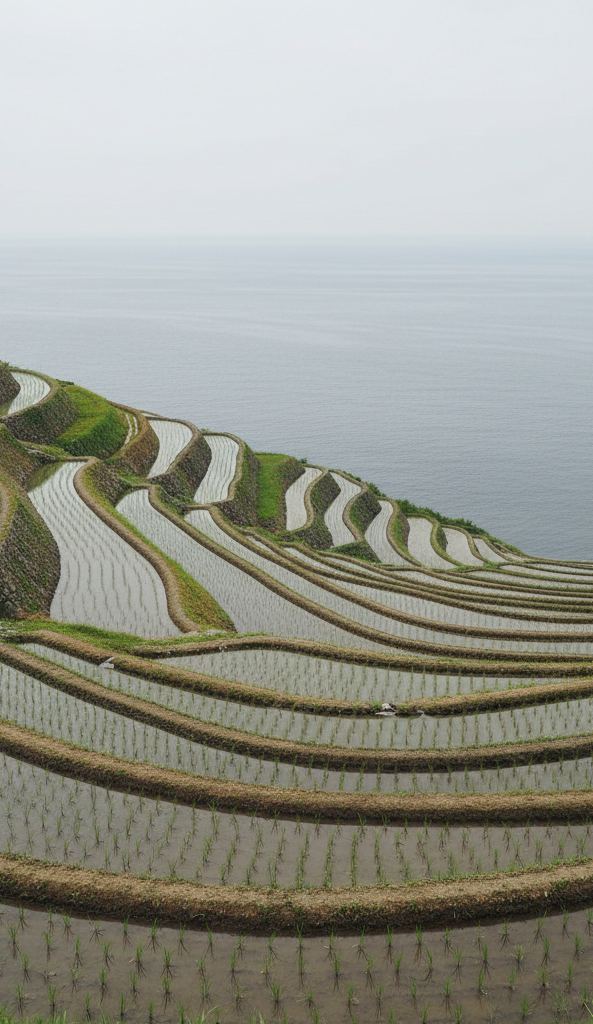
Noto is a thumb of land north of Kanazawa, sea on both sides and very little on it. The outer coast is rock and wind; the inner one is quieter, with small ports and boat sheds pulled up above the tide. Three things are still worked here rather than remembered: salt, made by throwing seawater over sand flats and boiling the brine down in an iron pan; lacquer, laid on in many thin coats in workshops that still take orders from across the country; and rice, grown on terraces that run down to the water. Parts of the peninsula are still under repair after the earthquake of January 2024. Some roads are single lane diversions and some workshops have not reopened. The operating company works to what is open in your week and says so in writing beforehand.
Salt, lacquer and a working day
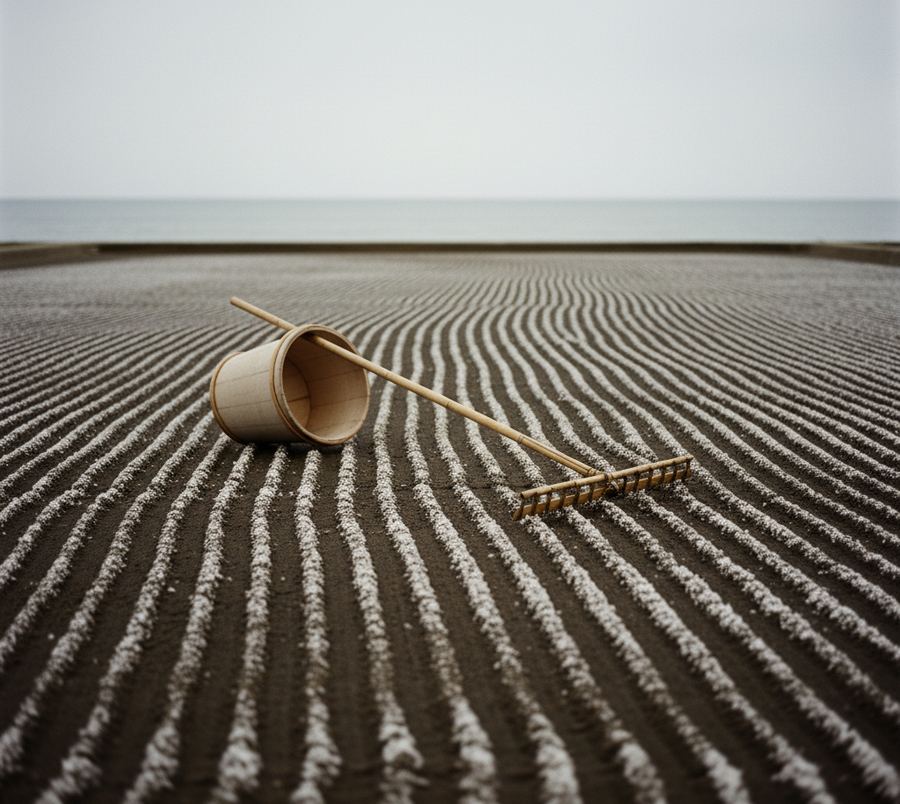
Work on the salt flats starts early, because the pouring is done before the heat. You can watch a whole cycle: sand raked flat, seawater carried up the beach in wooden pails and thrown by hand, the salt crust scraped off, the brine boiled through the night. That is a morning gone. Lacquer is the opposite of it, indoors and slow, and one workshop visit of ninety minutes with the maker present teaches more than three rushed ones. Between the two, days are road and coast: terraces above the sea, a port with the boats hauled out, a cedar shrine at the end of a lane. Dinner is fish and vegetables at a set hour in the house you sleep in, because after dark there is nothing else open.
Half a day to get here
The move into this segment is a half day, which the office marks as a two. From the city at the foot of the peninsula it is roughly three and a half to four hours by road to the far coast, with two stops built into it, since the interesting part of that drive is the middle and not the end. Some of it runs single lane where repairs are under way, and that can add forty minutes with no warning. There is no shortcut: the peninsula is long and one road goes along it. If you are taking the whole line, this is the second move of three, and the one after it is heavier again, a night spent in transit.
How the $1,740 is built
From $1,740 per person, two sharing a double room, for five nights. That figure holds the five nights, breakfast daily and dinner every evening, since the houses serve it and there is no alternative within reach, the road transfer out from the city and back to the line, the salt flat morning, and one lacquer workshop with the maker present. It does not hold your travel into the country, lunches, drinks, anything bought at a workshop, or insurance, which is not sold here and not advised on either. The operating company invoices you in its own name and takes your payment. This office holds no card details and is paid a commission by that company afterwards. The figure is confirmed by them before anything is held.
| Nights | 5 |
|---|---|
| From | $1,740 per person, two sharing |
| Move into it | half a day |
| Part of | Sea of Japan coast |
| Taken alone | Yes. Nothing obliges you to take the rest of the line. |
| Inside the figure | Rooms, the ground arrangements named on this page, and the local operating company's own charges. |
| Outside the figure | Getting to the country, meals not named above, anything personal, and anything you add later. |
Asked before people commit
Is the peninsula repaired enough to be worth five nights?
Parts are and parts are not, and we would rather you knew which before you commit. The main route is open with diversions; some coastal villages are still cleared ground. Salt work, lacquer workshops and the terraces are all running. If your reason for coming is one particular workshop or one particular house, ask first, because we cannot promise any single one of them is open in your week.
Can I drive myself instead of using the transfers?
You can, but the figure quoted here has the driving inside it and does not come down if you decline it. This office does not arrange car hire, does not check driving permits and will not tell you which permit you need. If you want to drive, say so and we will ask the operating company to quote you the nights on their own instead.
What happens if weather stops the salt work?
Nothing about weather is promised here. Heavy rain stops the pouring, and in a wet week you may find the pans idle and the boiling shed working instead, which is the less photogenic half of the same job. The workshop visit, the terraces and the coast road carry on regardless. No part of the figure comes back for a day the sky spoils, because nobody controls it.
Segment 2 of 3 on Sea of Japan coast
You can take this segment on its own and leave the rest of the line alone. Nothing here obliges you to walk the whole thing, and the figure for one piece is the figure for one piece.
Reserve one segment, or a whole line
This form is open at any hour, and whatever reaches it is read by a person who answers inside one working day. Nothing you send commits you, and no figure is charged at this end at any point.